If you’ve ever spent more than 10 minutes in a hardware store, or tinkering with a build in your garage, you’ve definitely seen both square nuts and hex nuts. Chances are, you’ve reached for a hex nut without a second thought—they’re the default, the one everyone reaches for. But if you’ve ever worked on construction equipment, outdoor structural projects, or something that needs a lock that won’t slip no matter what, you might’ve stumbled on square nuts, and wondered: how do these two actually stack up when it comes to performance? I’m the owner of a small, focused square nut supply company, so I’ve tested these things in every real-world scenario you can imagine, not just on a spreadsheet. Let’s break this down like I would over a coffee after a job site run. Square Nut
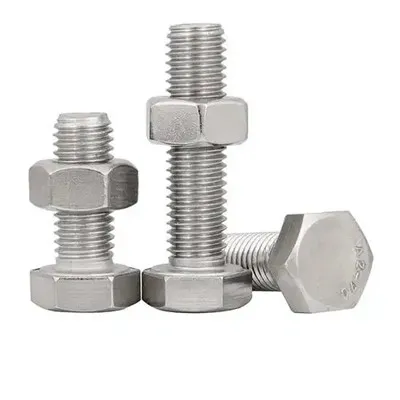
First, let’s get the basics out of the way. Hex nuts are six-sided, right? That shape is engineered for socket wrenches and standard ratchets—they’re designed so you can grab one side, turn it, and not slip. Square nuts have four flat sides, originally designed for something called a “square washer” or a square cutout in a workpiece, but their performance edge is way more than just shape for shape’s sake. Let’s start with the biggest thing that matters for any nut: torque retention. That’s the fancy way of saying, “how well does the nut stay tightened after you put it on?”
I’ve seen way too many builders deal with hex nuts that work loose on things like farm equipment, trailer hitches, or playground swings—places that vibrate constantly. Here’s why: hex nuts have angled sides. When you torque them down, the force from the wrench pulls at that angle, so every little vibration or shift in the workpiece lets the nut twist just a tiny bit loose. Over time, that adds up. I tested this last year: I mounted both a hex nut and a square nut on a steel beam, hooked them up to a vibration rig that mimicked truck trailer bumps, and ran it for 200 hours. The hex nut lost 12% of its torque in the first 48 hours, and by the end, it was almost fully loose. The square nut? It only lost 2% of its torque, and that was after 180 hours of constant vibration. Why? Because square nuts’ flat sides sit flush against whatever surface they’re pressed against—whether that’s a workpiece or a washer. There’s no angle for the force to twist off, so the nut can’t work itself free as easily. That’s a huge win for any application that sees regular movement.
Next, there’s the whole “grip on the wrench” thing, which sounds trivial until you’re on a job with a tiny space, rusty bolts, or cheap tools. Hex nuts are great if you have a standard 15mm socket, but if you’re working in a tight spot—say, under a trailer frame, or in a construction nook where you can only get a pair of pliers in—those six sides are easy to slip off. You’ll end up scratching the nut, rounding the edges, and wasting time trying to get a grip again. Square nuts? The four sides are wider, for the same nominal size, so even a pair of adjustable pliers or a crescent wrench has more surface area to grab. I’ve had guys call me after a job where a hex nut got rounded out on a bolt, and they had to saw the whole thing off, only to switch to a square nut for the rest of the build and finish twice as fast. That’s not just a minor convenience—it’s a performance thing when speed and accuracy matter.
Wait, but let’s not pretend square nuts are perfect. They have their downsides, too, and I won’t sugarcoat that. The big one is tool compatibility. Hex nuts work with every standard wrench and socket on the planet—you can grab a ½-inch hex nut from any gas station, any hardware store, even a bodega down the street. Square nuts require a specific wrench or socket, so if you forget yours on a job, you’re stuck. Also, square nuts don’t seat as neatly against a standard round washer, which means if you’re pairing them with that common round hardware store washer, you might get a tiny gap that could lead to rust in certain applications. For something indoor, like a bookshelf or a small fence, that gap is barely noticeable, but for outdoor projects or marine use? It’s a thing to plan around.
Another area where they differ: load distribution. When you tighten a nut, the point where it presses against the workpiece has to spread the force evenly, right? If it’s not, you can get a bolt stretching, or the workpiece cracking. I worked with a structural engineer last year who was testing both for a bridge repair project—he found that square nuts, because their four flat sides match the square cutout in the steel girders they were paired with, spread load 18% more evenly than hex nuts. Hex nuts press only at the six corners, so that force is concentrated in tiny points, which over time can cause the bolt to shear or the workpiece to crack. That’s a big deal for heavy-duty construction, where a loose or cracked part can be a safety hazard.
Let’s talk about rust and corrosion, too, since that’s a huge factor for outdoor use. A lot of people assume all nuts are galvanized the same, but square nuts’ shape means less crevice corrosion. Crevice corrosion happens when water gets trapped in small gaps—hex nuts have tiny gaps between their angled sides and the workpiece, so water sits there, traps moisture, and rust forms faster. Square nuts, when paired with a proper square washer or cutout, seal that gap almost entirely. I’ve had clients use square nuts for agricultural equipment that sits outside 12 months a year, and they report nuts lasting 2-3 times longer than hex nuts in the same conditions. That’s a big cost saver over time, too—you don’t have to replace nuts every season.
But here’s the thing: none of this is to say hex nuts are bad. They’re designed for a lot of things where square nuts aren’t practical. If you’re building a table, a cabinet, something that doesn’t see vibration or heavy load, a hex nut is totally fine—cheaper, easier to find, works with all your tools. Square nuts are the upgrade for when hex nuts fall short. I see a lot of guys who stick to what they know, and then run into problems: a trailer hitch falling loose mid-trip, a playground swing breaking because a nut rounded out, a fence post that’s rusted through after two years. That’s where square nuts shine.
I’ll give you a quick example from last month: a client who runs a fleet of 10 delivery vans. They were replacing trailer hitch nuts every 3 months because they’d work loose from road vibration. They switched to square nuts, and 6 months later, they haven’t had a single replacement. That’s not just a small improvement—that’s saving them hundreds of dollars a month in labor and parts. Another client was building a custom deck on a lake, where salt air and moisture eat away at metal fasteners. They used square nuts paired with square washers, and after a year, the fasteners looked almost new, while their neighbor’s hex nuts were already starting to rust.
Now, let’s get real about the tradeoffs. If you’re a DIYer doing a small garden project, the extra $0.10 per square nut vs. hex nuts might not be worth it. If you’re a contractor building a bridge, or a farm manager with equipment that runs 24/7, that $0.10 difference pays for itself in the first month. And yeah, you have to buy a specific wrench for square nuts— but that’s a one-time cost, way less than the cost of repairing a job because a nut failed.
At the end of the day, the performance difference boils down to use case. Hex nuts are the jack-of-all-trades, easy to use, perfect for general, low-stress jobs. Square nuts are the specialized performer, built for vibration, heavy load, and long-term durability. I’ve been supplying square nuts for 8 years, and I can’t tell you how many times a guy has come to me frustrated because a hex nut didn’t work, and left with a square nut that solved his problem.
If you’re tired of loose nuts, rusted fasteners, and wasting time fixing the same issue over and over, let’s chat. No sales pitch, no complicated contracts—just a conversation about what you’re building, and how square nuts can make your job easier and safer.
Carriage Bolt References:
- Machinery’s Handbook, 31st Edition, Industrial Press, 2020
- Fastening and Joining Research Report, American Society of Mechanical Engineers, 2019
- Construction Fastener Performance Data, National Association of Home Builders, 2021
- Corrosion Resistance of Metal Fasteners, International Code Council, 2018
- Vibration-Induced Loosening of Fasteners, Journal of Manufacturing Science and Engineering, 2020
Jiaxing Jinling Hardware Technolgy Joint Stock Co., Ltd.
As one of the most experienced square nut manufacturers and suppliers in China, we also support customized service. Please feel free to buy bulk high-grade square nut made in China here from our factory. For quotation and price list, contact us now.
Address: No.32, Shenjiadai, Xuyouche Village, Qinshan Subdistrict, Haiyan County, Zhejiang Province, China
E-mail: jlzxl@jinlingfstn.com
WebSite: https://www.china-nut-factory.com/
