What’s good, folks? If you’re here, you’re probably either in the mining or construction game, or maybe you’re just curious about how those big, loud trucks haul mixed explosives without blowing anything up. I’ve been selling mixed explosive trucks for over 10 years, and let me tell you—most people don’t realize that the route you take with these trucks is almost as important as the truck itself. Mixing your explosives on-site saves you a ton of money, but choosing the wrong route could turn a simple delivery into a whole lot of headaches (and no, not the good kind). Let’s break down what works, what doesn’t, and why I’ve seen so many botched deliveries because of a bad route. Mixed Explosive Truck
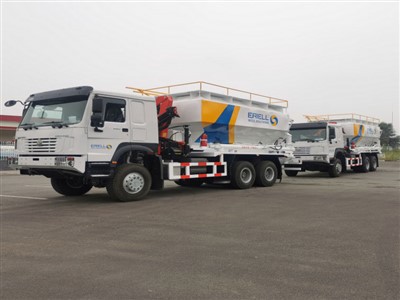
First off, let’s get one thing straight: mixed explosive trucks aren’t the same as those old trucks that haul pre-made explosive sticks. We mix the components (fuel, oxidizer, sensitizers) right in the truck’s bulk mixing system, so the material isn’t actually explosive until it’s blended. That means we have a little more flexibility than you might think, but we still can’t cut corners—these components are flammable, and when mixed improperly, they’re still dangerous. I’ve had customers ask me, “Can’t we just take the shortcut through the back roads?” and my answer is almost always “No—here’s why.”
Let’s start with the absolute no-go routes. These are the ones I mark as red zones on every route plan I help a customer build, and I won’t even send a truck down them. First, any route with narrow, unpaved back roads that wind through residential areas or schools. Wait, you might think, “What’s the big deal? It’s a big truck, yeah, but it’s not carrying fully loaded dynamite.” Wrong. Even the mixed components are sensitive to friction and heat, and if you get stuck on a narrow road with a bunch of kids walking to the bus stop 50 feet away, that’s a recipe for disaster. I had a customer a few years back who tried to cut a 20-minute route down to 8 minutes by taking a dirt road through a small town. His truck hit a pothole, jostled the mixing compartment, and he had to pull over and call emergency services to do a controlled inspection. The town freaked out, he got fined, and he missed his entire blast window at the mine. Total waste of time and money—all because of a shortcut.
Another red zone: routes through areas with high fire risk, like dry forests or grasslands, especially during summer months. The components we use have a high fuel content, and a single spark from a stray cigarette or a hot exhaust pipe could ignite them. I always check the local fire danger ratings before approving any route. Last year, a mine in Colorado tried to send their truck through a national forest that was under a “red flag” fire warning. I told them not to do it, but they insisted—said the other route was 45 minutes longer. Well, a brush fire started on the side of the road, the truck’s exhaust caught a whiff of it, and they had to unload the entire batch at a temporary, unapproved storage spot. They ended up paying $12,000 in cleanup fees and lost a whole day of production. Lesson learned: fire risk doesn’t care about your schedule.
Now, what routes actually work? Let’s start with paved, high-capacity roads. These are your bread and butter. Wide lanes, smooth surfaces, clear signage, and low traffic density when you schedule deliveries outside of rush hour. I always advise my customers to schedule mixed explosive truck deliveries during off-peak times—usually early morning, before 6 a.m., or late at night, after 9 p.m.—so you don’t have to dodge regular traffic, passenger cars, or even big rigs that might swing wide and come too close. Paved roads also mean no potholes, no loose gravel, no unexpected debris that could cause friction or jostle the mixing system. I’ve got a few regular mine clients that use the same 120-mile paved route every week, and they’ve never had a single issue with it. It’s reliable, it’s safe, and it gets the explosive to the site on time.
Next, routes that go through industrial zones or designated heavy truck corridors. These are perfect because they’re made for big, specialized vehicles like ours. Industrial zones have restricted access for residential traffic, so you don’t have to worry about kids, pets, or random cars getting in your way. Plus, the roads in industrial areas are built to handle heavy loads, so no unexpected cracks or uneven pavement. I recently worked with a construction company that’s building a new highway through Texas—their route goes straight through the state’s industrial truck corridor, and they rave about it. They say the road is smooth, the speed limits are posted clearly, and there are zero residential intersections along the way. That’s exactly what we need.
Wait, but what about rural areas with no industrial corridors? Not all mining sites are right next to a highway, so sometimes you have to take a secondary paved road that’s well-maintained, not just a dirt track. I call these “yellow zone” routes—they’re not perfect, but they’re way better than back roads. The key here is to check the road condition before you go. I always tell my customers to use road condition apps, talk to local drivers, or even do a test run with an empty truck before committing to a route. A few years back, I had a mine in Wyoming that had to take a secondary paved road for the last 30 miles of their delivery. We did a test run first, and we noticed that one section had some uneven pavement that would have caused too much vibration in the mixing system. So we scheduled that part of the route during daylight, when the road crew was out working, and they fixed the section before we sent the loaded truck. No problems at all. That test run saved us from a potential disaster.
Another thing to consider on these yellow zone routes: proximity to other critical infrastructure. You don’t want to be within 500 feet of a gas station, a power plant, or a water treatment facility. Wait, why? Because those places have their own safety protocols, and if something were to go wrong, they might not have the resources to handle it, or they might need to evacuate. I always map routes that keep a safe distance from these types of structures, even if that means taking a slightly longer road. My rule of thumb is: if a building has a sign that says “Hazardous Materials No Stopping,” don’t get within a mile of it. Simple as that.
Now, let’s talk about timing. This is a big one that a lot of new customers overlook. Not only scheduling during off-peak hours, but also avoiding times when the weather is bad. Rain, snow, ice—all of these things make roads slippery, increase the risk of skidding, and can make it harder to control a big truck. I had a customer in Minnesota who tried to deliver a load in the middle of a snowstorm. The truck slid on an icy patch, hit a guardrail, and they had to call a hazmat team to come out and clean up the spilled components. They lost 30% of the load, got a ticket for reckless driving, and the mine had to pause their blast for two days because they didn’t have enough explosive. Don’t do that. Check the weather forecast for at least 72 hours before every delivery, and if there’s any chance of bad weather, reschedule. It’s not worth the risk.
Wait, what about when you have to make a delivery to a remote site, like a mine that’s way out in the desert with only a dirt access road? I know some of you are thinking, “Can we use that road? It’s only 10 miles.” No, but that’s a common mistake. Dirt roads are unpaved, they have loose gravel, they can get rutted after rain, and they’re usually not maintained for heavy loads. If you have to go to a remote site, I always recommend getting a specialized off-road route that’s been approved for hazardous materials. Some mines use access roads that are graded regularly, have wide turns, and are marked with hazard signs. I’ve helped a few clients set up these routes, and as long as the road is in good condition, has a clear way to turn around, and no obstacles that could block the truck, it works. But I will never approve a dirt road that’s only used by ATVs for a mixed explosive truck. That’s just asking for trouble.
Another pro tip: communicate with local authorities. A lot of people don’t realize that most states require a permit to haul hazardous materials, and that includes mixed explosives. When you’re planning your route, you have to notify local police and fire departments, especially if you’re going through small towns. Let them know when you’ll be there, what you’re hauling, and who to contact in case of an emergency. I always help my customers with this— I’ve got a list of contacts across the country that I can pass along, so you don’t have to go through the hassle of filling out all the forms yourself. Last month, a customer of mine was planning a delivery to a new mine in Arizona, and they forgot to notify the local sheriff’s office. The sheriff pulled them over, impounded the truck, and they missed their blast window. That could have been avoided if they’d done the basic communication step.
Let’s also talk about the truck itself, because even the best route won’t help if the truck isn’t up to par. Wait, you asked about routes, but they go hand in hand. I build all my mixed explosive trucks with advanced suspension systems to minimize vibration, GPS tracking to monitor the truck’s location and speed, and a mixing compartment that’s sealed tight. But even with that, a bad route can cause issues. For example, if you’re taking a road with a lot of sharp turns, that can make the truck tip, or cause the mixing components to slosh around too much. I always tell my customers to stick to routes with gentle turns, no sharp curves, and wide enough lanes for a big truck. No switching lanes, no sudden stops—just a straight shot (or as straight as possible) to the site.

Now, let’s wrap this up with a quick recap so you don’t forget anything. The best routes for mixed explosive trucks are: paved, well-maintained roads, industrial truck corridors, routes that are far from residential areas and critical infrastructure, scheduled during off-peak hours and good weather, and approved by local authorities. The routes to avoid are: narrow back roads, unmaintained dirt roads, areas with high fire risk, routes through crowded residential or commercial areas, and routes that are too short (leading to rushing).
Explosives Production Line If you’re in the mining, construction, or quarry business, and you’re looking to switch to on-site mixed explosives to save money, or if you’re tired of dealing with botched deliveries and safety issues, I’m here to help. I’ve been in this game for 10 years, and I’ve helped over 200 clients build safe, reliable routes for their mixed explosive trucks. I don’t sell fancy, overpriced trucks— I build ones that are made for the job, and I’ll work with you every step of the way to make sure your routes are safe, compliant, and on time. If you’ve got questions, if you need a route plan, or if you’re ready to talk about getting a mixed explosive truck that fits your needs, hit me up. No pressure, just real advice from someone who’s been there and done that.
References
- National Fire Protection Association. (2020). Standard for Transportation of Hazardous Materials. NFPA 400.
- Mine Safety and Health Administration. (2021). Guidelines for On-Site Mixing and Transportation of Explosives in Mining Operations.
- Federal Motor Carrier Safety Administration. (2022). Hazardous Materials Route Planning Requirements for Commercial Vehicles.
- International Society of Explosives Engineers. (2019). Best Practices for Mixed Explosive Truck Route Selection and Pre-Delivery Inspections.
- American Road & Transportation Builders Association. (2021). Road Condition Assessment for Heavy-Hazard Commercial Vehicle Routes.
Shanxi Honghu Special Purpose Vehicle Manufacturing Co., Ltd.
As one of the most professional mixed explosive truck manufacturers and suppliers in China, we’re featured by quality products and good price. Please rest assured to buy bulk mixed explosive truck in stock here and get pricelist from our factory. Also, custom service is available.
Address: No. 16 Nanhuan West Street, Changzhi Economic and Technological Development Zone, Shanxi Province
E-mail: sxczhh15035590669@163.com
WebSite: https://www.mixedexplosivestruck.com/
