Hey there,
If you’ve ever walked into a process plant – whether it’s an oil refinery, a chemical processing facility, a pharmaceutical plant, or even a water treatment operation – you’ve probably seen Fisher ball valves in action, even if you didn’t stop to notice them. As a supplier who’s worked closely with these valves for over a decade, one of the questions I get asked most by maintenance teams, plant engineers, and even new operators is: “What makes a Fisher ball valve work?” More specifically, how does it actuate? Because if the actuation isn’t reliable, that ball valve is just a fancy piece of metal sitting in a pipe, not doing its job keeping flow controlled, safe, or consistent. Fisher Ball Valve
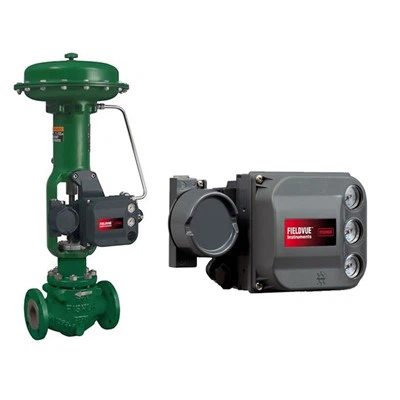
First, let’s get one thing straight: Fisher doesn’t do one-size-fits-all actuation for their ball valves. That’s a big part of why their valves are so ubiquitous across so many industries. Actuation is the system that moves the ball inside the valve body – rotating it 90 degrees to open, close, or modulate flow – and choosing the right actuation method depends entirely on what the valve is being used for. I’ve seen this play out again and again with customers: a refinery needs a Fisher ball valve that can handle extreme temperatures and open fast in an emergency, a pharmaceutical plant needs one that’s precision-modulated for sterile flow, and a municipal water plant needs one that works without a power source if the grid goes down. Each of these needs a different actuation approach.
Let’s start with the most common actuation method for Fisher ball valves, and probably the one you’ll see in 70% of applications: pneumatic actuation. Pneumatic actuation uses compressed air or, in some cases, inert gas like nitrogen, to generate the force needed to turn the ball. Fisher’s pneumatic actuators are built to exacting standards – I’ve installed enough of these to know they’re not flimsy off-the-shelf parts. The core of a Fisher pneumatic actuator is a housing, usually made of durable aluminum or ductile iron, split into two chambers. Inside each chamber is a piston or a diaphragm connected to a stem rod that links directly to the ball valve’s stem. Here’s how it works: when compressed air is sent to one chamber, it pushes against the piston or diaphragm, creating linear motion. That linear motion gets converted to rotational motion via a rack-and-pinion gear system – the rack is attached to the piston, and the pinion gear on the valve’s stem meshes with it. Push the rack one way, and the pinion spins 90 degrees to twist the ball open; push the rack the other way, and it spins back to close.
What’s great about Fisher’s pneumatic actuators is the fail-safe option, which is non-negotiable for many process industries. If you need the valve to open if power fails, or close if a line pressure drops too low, you can add a spring return mechanism to the pneumatic actuator. The spring is pre-tensioned inside the housing, and when air pressure is removed, the spring pushes the piston to move the valve to its fail position. I had a customer at a natural gas compressor station a couple years back – their Fisher ball valve controls flow to a turbine, and if the compressor shuts down unexpectedly, the valve needs to close in under two seconds to prevent overpressure. We spec’d a spring-return pneumatic actuator for that exact scenario, and it’s worked flawlessly for three years now. Pneumatic actuation is also the go-to for explosive or hazardous areas, because it doesn’t use electricity – no spark risk, which is a huge deal for oil and gas, chemical, and mining operations.
Next up: electric actuation. This is the method for when you need more precise control, or when compressed air isn’t readily available, like in remote locations, or even in indoor facilities where pneumatic lines are a hassle to run. Fisher’s electric actuators are different from the basic electric valves you might find at a hardware store. They use an electric motor, usually AC or DC, to generate torque, and a gear train (much like a car’s transmission) to multiply that torque enough to turn the heavy ball in large, high-pressure valves. What makes Fisher’s electric actuators stand out is their precision – they can modulate the ball’s position to within a fraction of a degree, which is critical for applications where you need to control flow rate very tightly, like in pharmaceutical manufacturing where even a slight deviation in ingredient flow can ruin a batch, or in food and beverage processing where consistency is key.
I worked with a craft brewery last year that needed Fisher ball valves for their wort transfer lines. They were using manual valves before, and the operators were over-adjusting them, leading to inconsistent flow that threw off their fermentation times. We installed electric actuation on their Fisher ball valves, connected to their plant’s control system, and now they can set a exact flow rate, and the actuator holds that position perfectly. No more guesswork, no more wasted product. Electric actuators also have their own fail-safe options – many have built-in battery backups that let them move the valve to its required position if the main power goes out, and they come with built-in position sensors so you can monitor exactly where the ball is, remotely, via SCADA systems. That’s a game-changer for facilities with large pipe networks spread across multiple buildings or outdoor sites.
Then there’s hydraulic actuation, the workhorse for the toughest, heaviest applications. When you’re dealing with very large Fisher ball valves – like 12-inch and up, for high-pressure pipelines, deep water applications, or heavy industrial processes – pneumatic and electric actuators might not have enough torque to turn the ball. Hydraulic actuation uses pressurized fluid (usually oil, but sometimes water-based fluids for environmentally sensitive areas) to generate massive force, which translates to extremely high torque. A big 16-inch Fisher ball valve for a subsea oil pipeline, for example, needs hydraulic actuation – there’s no other way to generate the force to twist that thick, heavy ball shut under hundreds of meters of water.
Fisher’s hydraulic actuators are designed for extreme conditions, and they’re almost always fail-safe as standard for subsea or high-risk pipeline applications. They use either spring return (same concept as pneumatic, but the springs are much larger to handle the extra torque) or accumulator-based systems, where a pressurized fluid reservoir stores enough energy to move the valve even if the main hydraulic pump fails. I don’t work on subsea valves, but I’ve serviced land-based high-pressure hydraulic actuators for a pipeline in the Rocky Mountains, where temperatures drop to -20°F in winter. The hydraulic fluid and actuator are sealed to prevent freezing, and they operate just as reliably in cold weather as they do in summer heat. Hydraulic actuation is also fast – some can turn a 12-inch valve in under a second, which is critical for emergency shutdown (ESD) applications where a quick valve closure can prevent a major leak or explosion.
Wait, there’s also manual actuation, right? For small, low-pressure Fisher ball valves used in bypass lines or for local control where automation isn’t needed. I’ve installed tiny 1-inch Fisher ball valves with handwheel actuators for small bypass lines at water treatment plants, where operators need to adjust flow by hand during maintenance. It’s simple, it’s reliable, and it’s exactly what you need for those low-stakes, local use cases. But even Fisher’s manual actuators are built to last – the handwheel is connected to the valve stem via a worm gear, so you don’t have to use brute force to turn a tight valve, and they’re made with corrosion-resistant materials for outdoor use.
A lot of people ask me if there’s a difference in how Fisher’s actuation methods compare to other brands, and honestly, that’s where Fisher stands out. They test every actuator-valve combination to make sure it meets the specific requirements of the application, not just a generic spec. For example, when we spec a Fisher ball valve for a food and beverage plant, they’ll recommend a pneumatic actuator with stainless steel wetted parts if the valve is in contact with food, or an electric actuator with explosion-proof housing if it’s near any process fumes. They don’t just sell you a valve and an actuator; they match them to your needs, which is why I’ve been a Fisher supplier for 12 years – their support is reliable, and their products don’t fail when you need them most.
Common mistakes I see customers make when choosing actuation for their Fisher ball valves? Going too small on torque, which leads to the valve not fully opening or closing, causing wear on the ball and seat, or even flow inconsistency. Or not accounting for the environment – putting a pneumatic actuator in a dusty outdoor area without a weather seal, leading to clogged lines or damaged parts. Or skipping the fail-safe feature, which comes back to bite them when there’s a power outage or line pressure drop. I had a customer at a chemical plant a few years back that skipped fail-safe on their pneumatic Fisher ball valve, and when a power blip shut down the plant’s compressor, the valve stayed half-open, leading to a minor overpressure that had to be fixed with a shut-down. That cost them $50,000 in lost production, and we retrofitted a spring-return actuator within a week.
Another thing to know about Fisher’s actuation methods is that they’re all compatible with digital control systems now. Most of their newer actuators come with HART, Modbus, or FOUNDATION fieldbus connectivity, so you can monitor the actuator’s performance, track cycles, and get alerts if there’s a problem before it causes a shutdown. That predictive maintenance capability is huge – instead of waiting for a valve to fail, you can check its position, torque, and air/fluid pressure remotely, and schedule maintenance during a planned shut-down, not when an emergency hits.
At the end of the day, the actuation method of a Fisher ball valve isn’t just a technical detail – it’s what makes the valve work for your specific process. Whether you need pneumatic for hazardous areas, electric for precision control, hydraulic for heavy loads, or manual for local adjustments, Fisher has a solution built to their high standards. As a supplier, I’ve seen every type of actuation in action, and I can tell you that when you choose the right one, paired with a genuine Fisher ball valve, you get reliability that minimizes downtime, improves safety, and keeps your process running smoothly.

If you’re not sure which actuation method is right for your Fisher ball valve application, or you’re looking to replace or upgrade your existing valves and actuators, I’m here to help. We work with facilities across all industries, from small local operations to large multinational plants, and we can walk you through your options, provide accurate specifications, and make sure you get the right product for your needs. Reach out to discuss your requirements, and we can put together a solution that fits your process perfectly.
Fisher Valve Parts References
- Fisher Valves & Actuators. (2022). Actuator Selection Guide for Ball Valves. Emerson Process Management.
- Bloch, H. P. (2019). Process Machinery Selection and Reliability for the Chemical Industry. Gulf Professional Publishing.
- Miller, J. R. (2021). Control Valves: Actuation, Sizing, and Tuning. ISA – The Automation Society.
- National Fire Protection Association. (2020). NFPA 70: National Electrical Code (Hazardous Locations Section). NFPA.
- Subsea Valve Reliability Forum. (2020). Hydraulic Actuation for Deepwater Ball Valves. Offshore Technology Conference.
Century Weiye (Dalian) Control Equipment Co., Ltd.
As one of the leading fisher ball valve manufacturers and suppliers in China, we warmly welcome you to buy discount fisher ball valve in stock here from our factory. If you have any enquiry about quotation, please feel free to email us. Quality products and reasonable price are available.
Address: 2205, Building 8, Red Star International, Ganjingzi District, Dalian City, Liaoning Province
E-mail: serena@valvesjwy.com
WebSite: https://www.valve-sjwy.com/
