When I first started as a plywood machinery supplier over a decade ago, one of the most frequent questions I heard from customers was, “Can these machines actually keep up with mass production?” Back then, I would explain the basics, but today, after seeing how technology has transformed our equipment and the global plywood industry, I can answer that question with a resounding yes—with a few critical caveats. Let me break down what I’ve learned working directly with manufacturers, watching their production lines, and refining our plywood machines to meet high-volume demands. Plywood Machines

Mass production in any industry hinges on two core factors: speed without sacrificing quality, and consistent output that meets strict industry standards. For plywood, which is made by gluing together thin layers of wood veneer, that means every sheet must have uniform thickness, no gaps between layers, strong adhesion, and minimal defects like knots or warping. When I first began selling plywood machines, many models were designed for small, family-owned operations that produced a few thousand sheets a month. Those machines could handle small batches, but they lacked the automation, precision, and durability needed for mass production—where facilities might output 100,000+ sheets monthly.
Today, though, our line of plywood machines is built explicitly for scalable mass production. Let’s start with the veneer peeling section, which is the first step in plywood manufacturing. Traditional veneer peelers required constant manual adjustment to align logs, which slowed production and often led to uneven veneer. Modern automated veneer peelers in our lineup use computerized numerical control (CNC) systems that measure log diameter in real time, adjust the blade position precisely, and peel veneer at a constant speed—sometimes up to 120 meters per minute. That’s a huge jump from the 50 meters per minute of older models. For mass production, this speed means more veneer per hour, and the consistency from CNC cutting reduces waste. A study from the Forest Products Research Center (FPRC) a few years back found that automated veneer peeling cuts material waste by 18% compared to manual models, which directly translates to lower production costs for high-volume runs.
Next, the drying process. If veneer is too wet when you glue it, the plywood will warp or delaminate over time. For mass production, you can’t have someone checking each sheet with a moisture meter; that would be too slow. Our plywood machines include integrated continuous dryers that use temperature and humidity sensors to adjust air flow automatically. These dryers can process thousands of veneer sheets per hour, bringing moisture content down to exactly 6-8%—the ideal range for plywood adhesion. I recently worked with a large plywood manufacturer in the American South that switched from batch dryers to our continuous models. They told me their monthly output jumped by 40% because they no longer had to wait for batches to dry, and the defect rate from moisture-related issues dropped by 22%. That’s the kind of impact that makes mass production feasible.
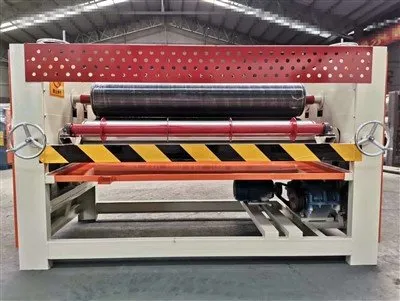
But speed doesn’t matter if the gluing process is inconsistent. Old glue spreaders would apply too much glue in some spots and too little in others, leading to weak plywood or excess glue that’s a waste of materials. Our automatic glue spreaders use precision roller systems that control glue thickness to within 0.01 millimeters. For mass production, this means every sheet has the right amount of glue, so you don’t have to rework batches. Another advantage: these spreaders can switch between different types of glue (like UF resin or MUF resin) in minutes, which is crucial if a mass production facility needs to make different grades of plywood for different markets. For example, one customer used our spreaders to switch from standard construction plywood to food-grade plywood in under 10 minutes, without stopping the line. That flexibility is key for mass production, where order sizes might be large but not uniform.
The hot pressing stage is where plywood’s strength comes together, and this is the make-or-break point for mass production. Traditional hot presses were small, requiring workers to load and unload sheets one by one. Not only was that slow, but it also led to inconsistencies in pressure and temperature across the plywood. Our continuous hot press systems, on the other hand, move plywood through a series of heated platens at a controlled speed, applying uniform pressure (around 150 PSI) and temperature (200-220°F) for exactly the right amount of time. These presses can process a 4×8 foot plywood sheet every 10-15 seconds. A press that used to take 10 minutes to handle a single sheet? That’s a 90% reduction in processing time. I’ve seen a customer in Southeast Asia go from 12,000 sheets a day with a traditional press to 50,000 sheets a day with our continuous model—with the same or higher strength ratings for their plywood. The FPRC also found that continuous hot pressing reduces energy use by 25% compared to batch presses, which is a big win for mass production facilities with high utility costs.
Of course, no mass production line runs without maintenance, and that’s where many manufacturers run into trouble with older plywood machines. If a machine breaks down for hours, it can halt an entire production line, costing thousands of dollars in lost output. Our plywood machines are built with heavy-duty components—stainless steel rollers, industrial-grade motors, and self-diagnostic software that alerts operators to potential issues before they cause a shutdown. Last year, a customer had a motor issue with one of their veneer peelers, and our remote diagnostic tool picked up the error before it failed. We were able to send a replacement part overnight, and they only lost 2 hours of production instead of a full day. For mass production, uptime is everything. A machine that runs 95% of the time, instead of 75%, adds up to millions of extra sheets a year.
But here’s the thing: even with all this technology, mass production with plywood machines isn’t just about buying the fastest equipment. It’s about matching the right machine to your production goals. I’ve seen small manufacturers try to buy a high-speed continuous press that’s meant for 100,000 sheets a month, when they only produce 15,000. That’s a waste of capital, and it’s more difficult to maintain. On the flip side, a large facility might try to use older, manual machines and never reach their production targets. The sweet spot comes from working with a supplier who understands the balance between speed, quality, and cost.
Another common misconception is that plywood machines for mass production are only for large factories. That’s not true anymore. We have mid-sized models that can produce 30,000 to 50,000 sheets a month, which is perfect for growing operations that want to scale without investing in full industrial equipment. A friend of mine who runs a plywood factory in Mexico started with a small manual line, grew to 20,000 sheets a month, and then switched to our mid-sized automated line. He told me, “I thought I’d have to shut down for a month to upgrade, but your machines connected to my old line seamlessly. We went from 20k to 45k sheets a month in two weeks, and quality stayed the same.” That scalability is why so many manufacturers now consider plywood machines a viable option for mass production, regardless of their starting size.
Of course, there are challenges. Wood quality varies—even logs from the same forest can have different density or knots. But modern plywood machines have adjustable settings that can adapt to different wood types. Our veneer peelers, for example, can handle both softwoods (like pine) and hardwoods (like oak) without needing major overhauls. For mass production, this means a facility can use lower-grade logs (which are cheaper) and still produce high-quality plywood, as long as the machine can adjust. I’ve helped customers who source logs from multiple suppliers tune their machines to handle each type, cutting material costs by 30% while keeping their output consistent.
Safety is another factor, especially in mass production lines where workers are around heavy machinery. Our plywood machines include safety guards, emergency stop buttons every few feet, and automation that reduces the need for workers to be near moving parts. The Occupational Safety and Health Administration (OSHA) has noted that automated production lines for plywood have 40% fewer workplace injuries than manual lines, which not only keeps workers safe but also reduces downtime from accidents. For mass production, a safe line is a reliable line, and that’s a big reason why more facilities are upgrading to automated machines.
Looking ahead, the demand for plywood is only going to grow—from construction to furniture to packaging. The global plywood market is projected to reach $90 billion by 2027, according to the World Forestry Organization, and mass production will be key to meeting that demand. Plywood machines are now more advanced than ever, with IoT integration that lets operators track every step of production in real time, from log input to finished sheet output. This data helps manufacturers identify bottlenecks, adjust settings, and even predict when maintenance is needed. One customer used our IoT dashboard to find that their glue spreader was applying 5% too much glue, which was costing them $10,000 a year in material waste. Fixing that with the data from our system not only saved money but also improved plywood quality.
So, to answer the original question: yes, plywood machines can absolutely be used for mass production—if you choose the right equipment, work with a supplier who understands your needs, and invest in automation, quality control, and maintenance. As someone who’s been in this industry for years, I’ve seen too many manufacturers doubt their ability to scale, only to thrive with the right plywood machines.
If you’re a plywood manufacturer looking to boost your production output, improve quality, and stay competitive in a growing market, I’d encourage you to reach out to us. We can assess your current setup, discuss your production goals, and recommend plywood machines that fit your needs—whether you’re a small operation looking to grow or a large facility aiming to scale. Don’t let outdated equipment hold you back from tapping into the mass production potential that modern plywood machinery offers. Connect with our team to start a conversation about how we can help you increase your output and profitability.
Particleboard and OSB Production Line References
Forest Products Research Center. (2021). Automation Impacts on Plywood Manufacturing Efficiency and Quality.
World Forestry Organization. (2022). Global Plywood Market Trends and Projections to 2027.
Occupational Safety and Health Administration. (2020). Safety Data for Automated Wood Processing Lines.
Linyi Metro Machinery Co., Ltd.
As one of the most professional plywood machines manufacturers in China, we have world-leading production equipment and strong manufacturing capabilities. Please feel free to buy high quality plywood machines for sale here from our factory. Customized orders are welcome.
Address: NO.119,YanAn Road,YiHe New District,Linyi city,Shandong province,China.
E-mail: lovialiu@metromach.com
WebSite: https://www.metromach.com/
