As a supplier of Quick Connectors, I often encounter inquiries from customers regarding the data rate supported by these essential components. In this blog post, I aim to provide a comprehensive overview of the data rates associated with Quick Connectors, exploring the factors that influence them, the different types of connectors, and their applications in various industries. Quick Connector

Understanding Data Rate in Quick Connectors
Data rate, often measured in bits per second (bps), gigabits per second (Gbps), or terabits per second (Tbps), refers to the speed at which data can be transmitted through a communication channel. In the context of Quick Connectors, the data rate indicates how fast digital information can flow between connected devices. This metric is crucial for applications that require high – speed data transfer, such as telecommunications, data centers, and high – definition video streaming.
The data rate supported by a Quick Connector is determined by several factors. One of the primary factors is the physical design of the connector. The number of conductors, their spacing, and the quality of the insulation all play a role in determining the maximum data rate. For example, connectors with more conductors can potentially support higher data rates because they can carry more data signals simultaneously.
The material used in the connector also affects the data rate. High – quality materials with low electrical resistance and good insulation properties are essential for minimizing signal loss and interference. Copper is a commonly used material for connectors due to its excellent electrical conductivity. However, in high – frequency applications, other materials such as optical fibers may be preferred because they can support much higher data rates and are less susceptible to electromagnetic interference.
Types of Quick Connectors and Their Data Rates
USB Connectors
USB (Universal Serial Bus) connectors are one of the most widely used types of Quick Connectors. They come in different versions, each supporting a different data rate.
- USB 2.0: This is an older standard that supports a maximum data rate of 480 Mbps. It is still commonly used for connecting peripheral devices such as keyboards, mice, and external hard drives where high – speed data transfer is not always necessary.
- USB 3.0 (also known as USB 3.1 Gen 1): This standard offers a significant improvement in data rate, with a maximum of 5 Gbps. It is suitable for transferring large files quickly, such as high – definition videos and large data backups.
- USB 3.1 Gen 2: With a maximum data rate of 10 Gbps, USB 3.1 Gen 2 is even faster. It is commonly used in high – end laptops, desktops, and external storage devices that require rapid data transfer.
- USB 4: The latest standard, USB 4, supports data rates of up to 40 Gbps. It is designed to meet the increasing demand for high – speed data transfer in modern devices, including Thunderbolt – compatible devices.
Ethernet Connectors
Ethernet connectors are used for networking applications. The data rate they support depends on the Ethernet standard.
- Fast Ethernet (100BASE – TX): This standard uses RJ45 connectors and supports a data rate of 100 Mbps. It is commonly used in small office and home networks.
- Gigabit Ethernet (1000BASE – T): Gigabit Ethernet offers a data rate of 1 Gbps. It is widely used in enterprise networks, data centers, and high – speed home networks.
- 10 Gigabit Ethernet (10GBASE – T): As the name suggests, this standard supports a data rate of 10 Gbps. It is used in data centers and high – performance networks where large amounts of data need to be transferred quickly.
Fiber – Optic Connectors
Fiber – optic connectors are known for their ability to support extremely high data rates.
- Single – mode Fiber (SMF) Connectors: These connectors can support data rates of up to 100 Gbps or even higher over long distances. They are commonly used in telecommunications networks, long – haul data transmission, and high – performance data centers.
- Multi – mode Fiber (MMF) Connectors: MMF connectors support lower data rates compared to SMF connectors but are still suitable for short – distance applications. They can support data rates of up to 10 Gbps or 40 Gbps, depending on the type of multi – mode fiber used.
Applications and the Importance of Data Rate
The data rate supported by Quick Connectors is critical in various industries.
Telecommunications
In the telecommunications industry, high – speed data transfer is essential for providing services such as voice over IP (VoIP), video conferencing, and high – speed internet access. Quick Connectors with high data rates ensure that these services are delivered smoothly without any lag or interruption. For example, fiber – optic connectors are used in backbone networks to transmit large volumes of data between different locations at extremely high speeds.
Data Centers
Data centers store and manage vast amounts of data. Quick Connectors with high data rates are necessary to transfer data between servers, storage devices, and networking equipment quickly. Ethernet connectors with gigabit or 10 – gigabit data rates are commonly used in data centers to ensure efficient data flow. Additionally, fiber – optic connectors are used for high – speed connections between different racks and data center facilities.
Consumer Electronics
In consumer electronics, the data rate of Quick Connectors affects the user experience. For example, a USB 3.0 or USB 3.1 Gen 2 connector on a smartphone or tablet allows for faster charging and quicker file transfer between the device and a computer. High – speed HDMI connectors are used to transmit high – definition video and audio signals from devices such as Blu – ray players and gaming consoles to televisions.
Our Quick Connectors and Their Data Rate Capabilities
As a Quick Connector supplier, we offer a wide range of connectors with different data rate capabilities to meet the diverse needs of our customers. Our USB connectors include the latest USB 4 models, providing data rates of up to 40 Gbps for high – performance devices. Our Ethernet connectors support Gigabit and 10 – Gigabit Ethernet standards, making them suitable for enterprise and data center applications.
We also provide high – quality fiber – optic connectors that can support data rates of up to 100 Gbps. These connectors are designed with precision to ensure low signal loss and high reliability, making them ideal for long – distance data transmission and high – performance networking.
Conclusion
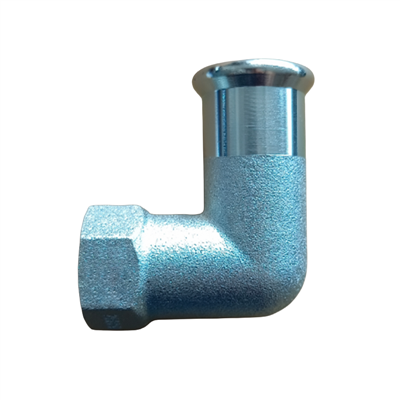
The data rate supported by a Quick Connector is a crucial factor in determining its suitability for different applications. Whether it’s for telecommunications, data centers, or consumer electronics, choosing the right connector with the appropriate data rate is essential for ensuring efficient data transfer.
Straight Connector As a supplier, we are committed to providing our customers with high – quality Quick Connectors that meet their specific data rate requirements. If you are in the market for Quick Connectors and need more information about our products, their data rate capabilities, or pricing, we encourage you to contact us for procurement discussions. We are here to help you find the best connector solutions for your needs.
References
- "Data Communications and Networking" by Behrouz A. Forouzan
- "Fiber Optic Communication Systems" by Govind P. Agrawal
- USB Implementers Forum official documentation
- Institute of Electrical and Electronics Engineers (IEEE) standards for Ethernet
Taizhou Tongda Machinery Co., Ltd.
As one of the most professional quick connector manufacturers and suppliers in China, we also support customized service. We warmly welcome you to wholesale high quality quick connector in stock here from our factory. For quotation, contact us now.
Address: No. 20, Chuyang Road, Xiaoshuibu Industrial Zone, Yucheng Subdistrict, Yuhuan City, Taizhou City, Zhejiang Province
E-mail: sw@chinatdjx.com
WebSite: https://www.tongdaparts.com/
