If you’ve ever shopped around for palletizing or depalletizing robots, you’ve probably noticed there’s no one-size-fits-all price tag. As a supplier who’s spent years talking to small business owners and huge warehouse managers alike, I get it—this stuff isn’t just about the robot itself. There’s a ton of hidden costs and variables that throw people off when they’re trying to budget. Let me break this down like I would for someone sitting across my desk, no corporate jargon, just real talk. Palletizing/Depalletizing Robot
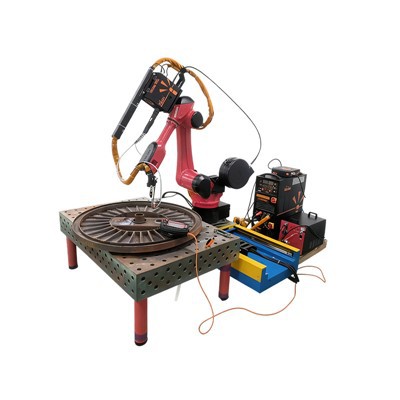
First off, let’s start with the basics: what exactly are we talking about here? A palletizing robot stacks boxes, cases, or bags onto pallets in neat, consistent layers. A depalletizing one does the exact opposite—unstacking them from full pallets to move down the line. These aren’t just fancy arms; they’re systems that need to work with your existing setup. That’s where most of the confusion on pricing starts.
Let’s start with the core robot unit, because that’s the number everyone asks about first. If you’re looking at a small, light-duty robot—think stacking small boxes of parts or snacks, up to 50 lbs per cycle—you’re looking at roughly $25k to $45k. These are the workhorses for small to mid-sized operations, like a 10-person manufacturing shop or a regional grocery distributor with one shift a day. They’re compact, don’t need a ton of extra gear, and are easy to install on your existing floor space.
Now, step up to medium-duty: 50 to 150 lbs per lift. That’s for bigger stuff—like cases of soda, heavy hardware, or bags of cement. These are pricier, between $45k and $80k. The reason is simple: they need sturdier arms, more powerful motors, and better precision to handle that extra weight without messing up stacks or causing damage. Most mid-sized warehouses that run two shifts a day go for these, because they balance speed and cost way better than smaller units.
Then there’s heavy-duty, for anything over 150 lbs. Think automotive parts, large appliance boxes, or bulk bags of grain. These can run anywhere from $80k all the way up to $150k, depending on how much weight they’re handling and how fast they need to work. You don’t buy these for a small operation—they’re for big distribution centers running 24/7, where downtime costs way more than the robot itself.
But wait—this is where a lot of people get burned. The robot price tag isn’t the total cost. There’s a whole list of extras that add up fast, and if you don’t plan for them, your budget will blow up. Let’s go through the ones we see most often.
First, the end-of-arm tool (EOAT). That’s the gripper at the end of the robot arm, and it’s non-negotiable. If you’re stacking regular cardboard boxes, a basic mechanical gripper is cheap—like $500 to $2,000. But if you’re working with soft bags that slip, you need a vacuum gripper, which runs $2k to $6k. And if you’re handling irregularly shaped stuff—like metal bins or odd-sized parts—you might need a custom gripper, which can jump to $10k or more. I had a customer last year who bought a $30k small robot and forgot the vacuum gripper; by the time they added that, they were at $35k, no surprises, but it was a wake-up call to make sure you factor this in first.
Next, integration and software. This is the brain of the operation. The robot can’t just stack boxes random—needs to sync up with your conveyor system, your warehouse management software (WMS), and whatever line you’re feeding it from. For small robots that are pretty plug-and-play, basic integration is $5k to $10k. For mid and heavy-duty ones that need to connect to a whole line of machinery, that goes up to $15k to $30k. And don’t forget the programming! You can try to do it yourself, but 9 times out of 10, you’ll need a tech to set up the stack patterns, adjust for speed, and fix any kinks. Programming fees are usually $75 to $150 an hour, and a basic setup is 20 to 40 hours. I always tell people to budget for at least a full day of programming when they’re getting a new robot—more if their operation is weird or unique.
Safety is another big one you can’t skip. If you’re putting a robot on your floor, it can’t be around people without barriers. OSHA has really strict rules around industrial robots, and cutting corners here is a bad move. Light curtains are cheaper, running $2k to $5k, or if you have more space, safety fencing is $5k to $15k. For heavy-duty robots that run 24/7, you might need extra sensors or emergency stop buttons, which add another $1k to $3k. Last thing you want is an OSHA fine or, worse, an accident. I’ve never had a customer complain about investing in proper safety gear.
Then there’s installation and site prep. Can you get the robot in your building? Does your floor have enough strength to hold it? These robots are heavy—even the small ones are 1,000+ lbs, medium are 3,000+, heavy are over 10,000 lbs. If your floor is old or weak, you might need to pour a reinforced pad, which is $2k to $10k depending on the size. Installation itself is usually $3k to $8k, depending on how far our techs have to travel and how complex the setup is. If you have to move existing conveyors to make space, add another $5k or more.
Now, what about the other side—depalletizing robots? A lot of people mix these up, but they’re usually a bit pricier than comparable palletizing ones. Why? Because depalletizing has to handle different layers, maybe empty pallets, and sometimes unload mixed loads, not just stack identical boxes. A small depalletizer is $30k to $50k, medium $55k to $90k, heavy $90k to $160k. Same rules apply, but the extra handling complexity adds a little to the base price.
Wait, let’s talk about the factors that make this even more variable, because two people buying the same size robot can end up paying way different. First, speed. A robot that stacks 10 cycles per minute is way cheaper than one that does 20 cycles per minute, and that’s a huge deal for operations with high throughput. A small fast robot can be $5k more than a basic small one. Second, customizability. If you need the robot to handle multiple product types, switch pallet sizes on the fly, or integrate with super old machinery that no one uses anymore, that adds custom software or modified parts. That can tack on 10% to 30% to the total cost, depending on how custom it is. Third, support. Some suppliers offer 24/7 remote support for a monthly fee, which is great if you can’t afford downtime, while others only offer 9-to-5 phone support. Our customers know we offer 24/7 support for all of our robots, because a breakdown at 2 a.m. in a warehouse is way worse than a repair during the workday.
And let’s not forget about long-term costs, because people sometimes only look at the upfront price. Maintenance is usually 1% to 2% of the robot’s total value per year. So a $50k robot costs $500 to $1,000 a year for parts, checks, and repairs. Then there’s energy—these robots don’t use a ton of power, usually between 5 and 15 kW, so that’s like $500 to $1,500 a year in electricity, way less than the labor it replaces. Labor is the big one: a single palletizing worker costs $30k to $50k a year (plus benefits), and a robot works nonstop, no breaks, no overtime. That’s the payoff. Most of our customers see a full ROI in 18 to 36 months, sometimes even faster if they’re running multiple shifts.
Now, let’s get real about common mistakes people make when budgeting. First, only looking at the base robot price and forgetting all the extras. I had a customer a few months back who was set on a $25k small robot, and when we went through all the required gear, they ended up at $40k. They thought they could save by doing the integration themselves, but they had zero experience with WMS systems, so they had to hire us anyway. Second, overbuying. You don’t need a $100k heavy-duty robot if you’re only stacking 50 lbs at a time. I always ask customers how many shifts they run, how much each lift weighs, and how many pallets they need to do an hour— that’s how we match them to the right size, so they don’t waste money on a robot that’s too powerful. Third, underplanning for safety. We’ve had a few customers try to skimp on fencing, and it’s never worth it. OSHA fines are thousands of dollars, and a worker injury is way worse than any savings you get on cheap safety gear.
What about used robots? A lot of people ask about those, and yeah, they can be cheaper—usually 30% to 50% of the price of a new one. But there are tradeoffs. Used robots don’t come with a warranty, and you don’t get the same support. They might be outdated, have more wear and tear, and if they’re from a different manufacturer, integrating them with your current system can be a nightmare. We don’t sell used robots for exactly that reason—we’d rather sell a reliable new one that works for your setup, even if it’s a little more upfront.
So putting it all together, what does a total project cost look like? Let’s do a real example to make it concrete. Small operation: regional bakery, stacks 20lb boxes of pastries, 2 pallets an hour, one shift a day, 5 days a week. They get a small palletizing robot ($32k), basic vacuum gripper ($1.5k), basic integration and programming ($7k), light curtains for safety ($3k), floor prep and installation ($4k). Total: $47.5k. ROI here would be in about 2 years, since they replace one part-time worker.
Another example: mid-sized hardware distributor, stacks 75lb cases of tools, 10 pallets an hour, two shifts a day. They get a medium palletizing robot ($60k), custom mechanical gripper for odd-sized cases ($4k), integration with existing conveyor and WMS ($18k), safety fencing ($8k), reinforced floor pad and installation ($6k). Total: $96k. ROI here is even faster, like 18 months, since they’re replacing two full-time workers.
Now, I know this is a lot of numbers, and every operation is different. That’s why I don’t give one-size-fits-all quotes. Every customer has unique needs: different products, different floor space, different throughput, different budgets. If you’re at the point where you’re thinking about making the jump to a palletizing or depalletizing robot, don’t guess at the price. Shoot us a message, tell us a little about your operation—what you’re stacking, how much you need to do, how many shifts you run—and we can break down exactly what you need, no hidden fees, no sales fluff. We want you to get a robot that works for you, not one that’s too big, too small, or way over budget. No pressure, just straight talk. After all, we’ve been in this long enough to know that the best partnerships are when both sides are honest, and the robot actually makes your life easier, not more complicated.
Loading and Unloading Robot REFERENCES
- Occupational Safety and Health Administration (OSHA). Industrial Robot Safety Standards.
- Robotic Industries Association (RIA). 2024 Annual Robot Pricing Report.
- Logistics Management. ROI Analysis for Warehouse Automation Projects, 2023.
Dongguan Chuanglida Intelligent Equipments Co., Ltd.
As one of the most professional palletizing/depalletizing robot manufacturers and suppliers in China, we also support customized service. Please feel free to buy discount palletizing/depalletizing robot in stock here from our factory. For price consultation, contact us.
Address: Room 201, Building 2, No. 61, Shachang 1st Road, Dalang Town, Dongguan City, Guangdong Province
E-mail: haoguangli001@outlook.com
WebSite: https://www.boruntestech.com/
