If you’ve ever built a deck, assembled a car’s interior, or put together a IKEA shelf, chances are you used a cold forged fastener without even realizing it. They’re the reliable workhorses holding everything together—made by forcing metal into shape at room temp, no heat needed, which saves energy and makes ’em way stronger than traditional hot forged parts. But here’s the thing most first-time buyers don’t ask: the pre-form design is make-or-break. Mess that up, and you’ll get cracked fasteners, wasted material, or even tools breaking mid-production. As a cold forged fasteners supplier, I’ve seen way too many projects go sideways because someone skipped or messed up the pre-form step. Today, I’m breaking down what pre-form designs actually are (no jargon, I promise), why they matter, and the most common ones we use day-to-day. Cold Forged Fasteners
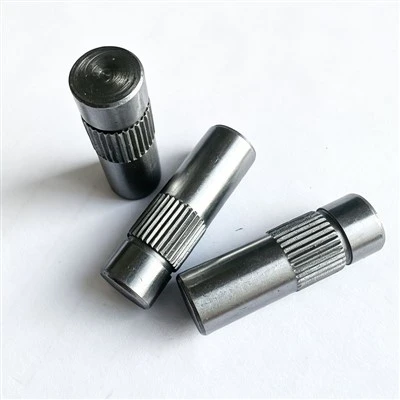
First, let’s keep this real: what’s a pre-form, anyway? Think of it like the rough draft of your fastener. Instead of starting with a solid block of steel and stamping out the final shape in one hit, we start with a simpler, smaller (sometimes bigger) piece of metal called a pre-form, then reshape it into the final bolt, screw, or nut. It’s not just cutting corners—cold forging metal moves, not breaks. If you force a solid chunk into a hex head in one go, the metal’ll crack or fold over itself. The pre-form lets us control where the metal flows, so we get consistent, strong parts every time. I’ve got a quick example: last month, a client came to us with a custom 10mm hex bolt for a agricultural machine. They tried making it in-house with a single blow, and half the heads split before they even got to the threading step. We tweaked their pre-form, split the forging into two hits, and their defect rate dropped to 0.2%—insane, right? That’s the pre-form doing its job.
Now, let’s get into the actual pre-form designs we rely on. These aren’t just random shapes—each is tailored to the fastener’s size, material, and end use. I’ll walk through the most common ones we use, and when we reach for each.
First up, the Cylindrical Pre-Form. This is the most basic, and honestly the workhorse for small to medium fasteners. It’s literally just a straight cylinder, usually cut to a specific length, with no extra curves or angles. We use this for standard wood screws, machine screws, and tiny bolts (like 2mm to 10mm diameter) that have simple heads—slotted, Phillips, or hex. Why it works? The metal flows evenly when we apply pressure, no uneven stress points. Last week, we ran a batch of 50,000 8mm Phillips head drywall screws for a construction supply brand. We used a cylindrical pre-form, and all threading came out smooth, no seizing during installation. The only downside? It’s not great for fasteners with big, complex heads or flanges. If you need a bolt with a wide flange (for a washerless joint), the cylindrical pre-form won’t push enough metal to make that flange thick and strong. That’s when we go next.
Second, the Flanged Pre-Form. This one’s exactly what it sounds like: a cylindrical base with a wider, flat flange already forged into one end before the final step. The flange’s thickness and diameter are calculated super specifically—too thin, and it’ll bend when you tighten the bolt; too thick, and you waste metal. We use this for everything from automotive wheel bolts to plumbing nuts, where the flange acts as a built-in washer to distribute pressure. A few months back, a small auto parts shop ordered 25,000 flanged bolts for electric car battery trays. They initially used a cylindrical pre-form, and their flanges kept chipping during installation because the metal was stretched too thin. We switched to a flanged pre-form with a 1.2mm thick flange (they had it at 0.8mm before), and not a single flange chipped in their testing. Pro tip here: if you’re working with softer metals (like aluminum or brass), make the flange 10-15% thicker than you would for steel. Soft metal doesn’t hold shape as well during forging, so that extra thickness prevents cracking.
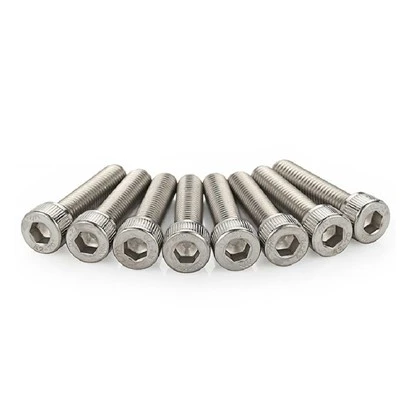
Third, the Tapered Pre-Form. This is for fasteners that need a tapered end—think wood screws with a pointed tip, or the conical seat on a socket head cap screw. The tapered pre-form narrows gradually at one end, so when we forge or thread it, the tip is sharp and uniform, not lumpy or uneven. I’ve seen so many cheap fasteners with misaligned tips that split wood or strip in metal—most of that comes from skipping the tapered pre-form. Last year, a decking company reached out because their exterior wood screws were snapping when driven into pressure-treated lumber. We swapped their old straight cylindrical pre-form for a tapered one, and their breakage rate went from 8% to less than 1% over a 10,000 screw test. The tapered tip guides the screw into the wood without forcing the metal to bend at a sharp angle, which reduces stress. One thing to watch: the taper angle. Too steep, and the tip will break off; too shallow, and it won’t bite into the material. For most wood screws, we stick to a 45-degree taper angle—works like a charm.
Fourth, the Multi-Stage Pre-Form. Okay, this is the fancy one we use for big, complex fasteners—like hex bolts with a countersunk head, or heavy-duty carriage bolts that have a square neck under the head to keep them from spinning. Single-stage pre-forms can’t handle those kinds of shapes, because you’d need way too much force and the metal would never flow evenly. Multi-stage means we use two, sometimes three pre-forms, each closer to the final shape than the last. Let’s take carriage bolts as an example: first, we make a short cylindrical pre-form, then a second pre-form with a slight bulge for the square neck, then the final step that forges the full square neck and rounded head. I recently worked on a project for a bridge construction company, ordering heavy 16mm carriage bolts. They tried a two-stage pre-form, but their square necks were misshapen—we added a third stage, refining the neck with each hit, and now their bolts meet ASTM strength specs no problem. The big advantage here is control: each stage lets us adjust how metal flows, so we don’t get defects. The trade-off? It’s a bit more work, so the parts cost a little more, but for heavy-duty applications where failure isn’t an option, it’s worth every penny.
Wait, I should also mention material-specific pre-form tweaks—this is something a lot of new buyers don’t think about, and it’s where a good supplier earns their keep. For example, stainless steel is way harder than regular carbon steel, so its pre-form needs to have slightly rounded corners to prevent cracking during forging. We don’t do sharp edges on stainless pre-forms, because hard metal doesn’t bend around sharp angles well. For aluminum, which is super soft, we actually make the pre-form a little smaller in diameter than the final part—soft metal stretches a lot during forging, so a smaller pre-form lets us get the exact final size without wasting metal. Brass? It’s somewhere in between, so we use a slightly tapered pre-form to avoid galling (that’s when metal sticks to the forging tool, ruining the part).
Now, let’s get real about common mistakes I see people make with pre-forms. First, skipping pre-forms altogether. I know it’s tempting to try and save a step, but trust me—even for simple screws, skipping the pre-form leads to higher defect rates. Second, copying a competitor’s pre-form design without testing. Every fastener’s end use is different: a bolt for a bike frame needs a way tighter tolerance than one for a wooden fence, so a pre-form that works for one won’t work for the other. Third, not adjusting pre-forms for order volume. If you’re ordering 100 screws, a simple cylindrical pre-form is fine, but if you’re ordering 10 million, a multi-stage pre-form will give you way more consistency and lower costs per part (even though each pre-form step adds a little time, the defect savings add up big).
As a cold forged fasteners supplier, I tell every new client: don’t just order a fastener—tell us what you’re using it for, and we’ll design the right pre-form for you. We don’t do one-size-fits-all, because that’s how people end up with parts that fail when they need ’em most. Last quarter, we had a client in the HVAC industry who ordered custom 12mm bolts for ductwork. They initially gave us a standard pre-form design that worked for their old duct model, but their new duct had a thicker wall, so the bolts needed a longer shank. We tweaked the pre-form’s length, kept the same head shape, and their install time dropped by 15% because the bolts fit perfectly the first time. That’s the kind of small, pre-form tweak that makes a huge difference for your project.
If you’re a procurement manager, engineer, or just someone who needs reliable fasteners for your job, don’t sleep on the pre-form. It’s not a hidden, technical detail only for machinists—it’s the reason your fastener will hold up to thousands of tightening cycles, or a harsh outdoor winter, or the weight of a car. Bad pre-forms = bad fasteners, no exceptions. If you’ve got a project coming up, whether it’s a small batch of custom screws or a large order of heavy-duty bolts, we’re here to walk you through pre-form options, adjust designs to fit your needs, and give you a fastener that’s strong, consistent, and worth every penny.
Screw References:
- Tschaetsch, H. (2007). Cold Forging of Fasteners: Process Design and Material Behavior. Springer-Verlag.
- American Society for Metals. (2019). Forging Design Handbook, 8th Edition. ASM International.
- Groover, M. P. (2020). Fundamentals of Modern Manufacturing: Materials, Processes, and Systems, 7th Edition. Wiley.
- Jonson, G. (2018). Pre-Form Design Optimization for Cold Forged Automotive Fasteners. Journal of Manufacturing Processes, Vol. 32, pp. 456-465.
Wuyuan Jieyi Automotive Electrical Appliance Co., Ltd.
As one of the most professional cold forged fasteners manufacturers and suppliers in China, we’re featured by quality products and good service. Please rest assured to wholesale bulk durable cold forged fasteners in stock here from our factory. We also accept customized orders.
Address: No. 7 Likeng Road, Industrial Park Wuyuan County, Shangrao City, Jiangxi Province
E-mail: wyjydqz@163.com
WebSite: https://www.wyjydq.com/
